
It’s that time of year – when we use the word “year” a lot!
One way that Sepharadim like to greet each other at the Jewish new year is with the Ladino phrase “Anyada buena,” so let’s unpack it. This doesn’t simply mean “a good year.” At the base of this phrase is the Ladino word anyo, plus a grammatical add-on called an augmentative. When el anyo becomes its augmented form, anyada, its gender shifts from masculine to feminine. That’s why in the phrase “Anyada buena!,” the adjective for “good” is in the feminine form.
However, that’s not the only change that the -ada brings to el anyo. Anyada also conveys the entire span of the year to come. Taken together, the phrase “Anyada buena!” implies may your year ahead be a good one. More adjectives can be layered into this expression: “Anyada buena, dulse i alegre” means “May you have a good, sweet, and happy year.”
We see a similar construction in the phrase semanada buena – may you have a good week ahead. Here, the -ada augmentative is added to la semana, the word for “week.” No change of gender needed, since semana is already feminine.
This fun grammatical nugget can be seen in the Ladino phrase a la ora orada, which idiomatically means “at the last minute.” Here, the -ada is added to the word la ora, which means hour.
And speaking of la ora – here’s a Ladino expression relevant to the High Holiday season: “es la ora de la neila.” Idiomatically, according to the Avner Perez dictionary, this expression means “it’s time to make a decision.” Literally, the expression means “it’s the hour of the Neila service.” Neila is a Hebrew word that means “locking.” It refers to the concept of the closing of the gates–both the physical gates of the ancient Temple, and the spiritual gates of prayer. The Neila service is the concluding service of the Yom Kippur holiday, when Jews have one more chance to ask to be inscribed in the Book of Life for the coming year. It’s a crucial moment when individual fates are being decided. An important and weighty ora, indeed, that found its way into a Ladino expression about decision making.
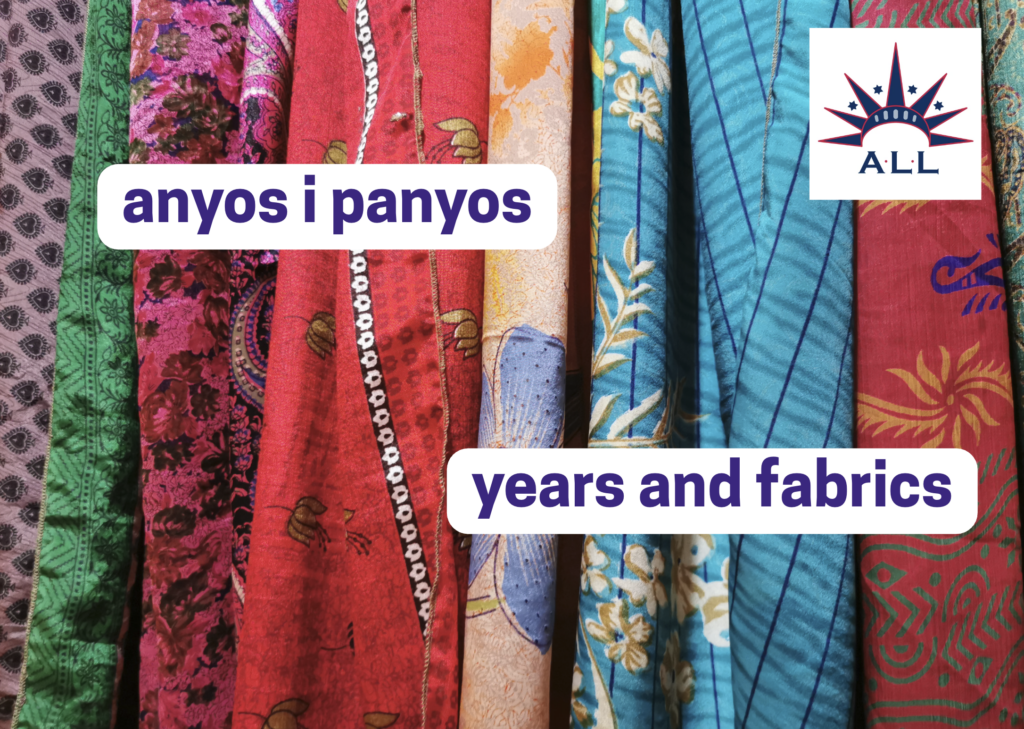
This season of the Jewish year encourages thoughtful reflection on the past. In that vein, I love the evocative Ladino expression anyos i panyos, which literally means “years and fabrics,” but conveys the sense of many years gone by. It makes me think of bolts of cloth stretching back over time. For example, I could ask, Has it been anyos i panyos since you took a Ladino class or had a Ladino chat? Perhaps in the new Jewish year you’ll be able to join a virtual conversation group like the ALL Ladino Lounge or find an opportunity to echar lashon, chitchat (literally “throw the tongue”) with someone in your local community. There’s no time like the present, so don’t echar oras (delay or literally “throw hours”)!
My hope for all my La Varika readers is for una anyada maraviyoza – a wonderful year ahead, or we could say, a year of wonders.
Opinions expressed in La Varika are solely those of the author.