
Two Years of Los Muevos Ladineros

Kamina kon buenos, te azeras uno de eyos.

Walk with good people and you will become one of them.

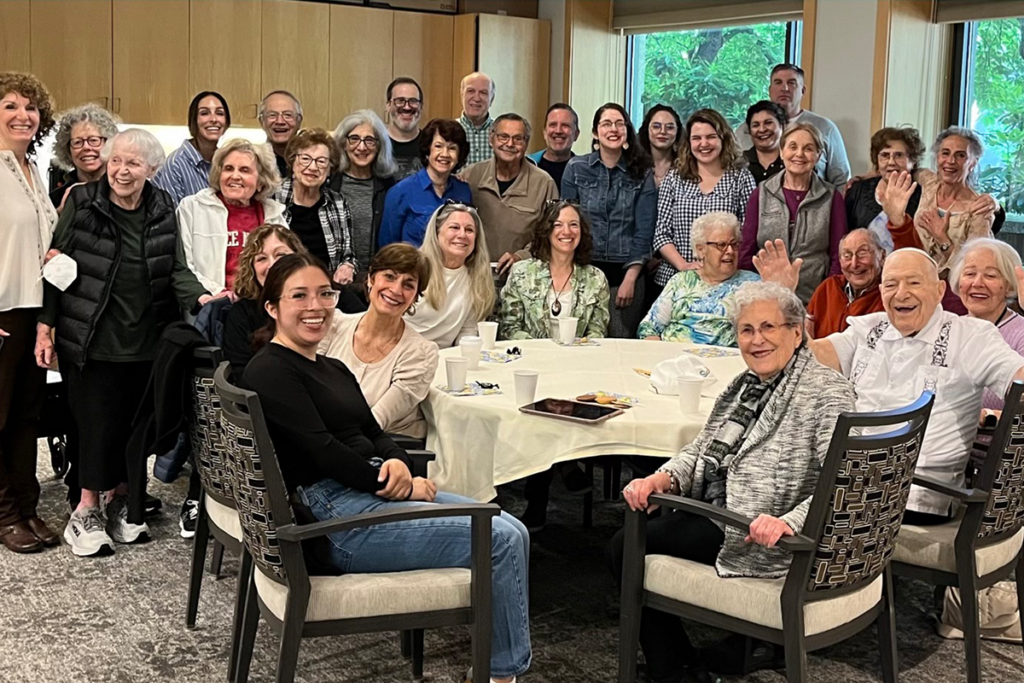
It’s been my honor to facilitate the newest incarnation of Seattle’s historic Ladino study group. Since its inception in May 2024, Los Muevos Ladineros has emerged as a vibrant space of intergenerational connection and learning. With two years of programming behind us, I am happy to reflect on the progress we’ve made. 

Admittedly, I was not sure what to expect when I accepted the Seattle Sephardic Network’s invitation to coordinate the Ladineros back in 2024; after all, I myself am somewhat new to Ladino studies, and I am not a native Seattleite. However, I knew two things to be true: 

1) When community statesman “Little” Al Maimon offers you an opportunity, you say yes.

2) This could be a great place to workshop the new curriculum that I am developing for the American Ladino League (ALL), a national nonprofit focused on supporting the community of Ladino students and educators in the United States. Together with the Seattle Sephardic Network and the UW Sephardic Studies Program, the ALL is a proud partner of the Ladineros.

Working with Cynthia Flash Hemphill, president of the Seattle Sephardic Network, we put together a successful Ladineros launch event in May 2024, and then settled into a rhythm of monthly sessions. The current group of participants is strikingly intergenerational, comprised not only of native speakers who grew up hearing Ladino at home in the Central District, the city’s Sephardic neighborhood for decades, but also of children and grandchildren of Sephardic immigrants to the Northwest, UW students who did not grow up in the Seattle area, Jewish people of non-Sephardic backgrounds, and people of non-Jewish backgrounds—who are all drawn to exploring the Ladino language. This mesklatina (mixture) of participants, while exciting, also poses a challenge when choosing suitable materials for such a wide range of knowledge levels.

When designing Ladineros activities, my priorities are inclusivity and accessibility, so I bring translation or at least transliteration whenever possible. To showcase local resources, I often select texts that are part of the UW Sephardic Studies’ digital collection, such as the silabarios (primers) used to teach reading and grammar to Sephardic children in the early 20th century. Locating each item in place and time helps to emphasize how far this language spread after leaving the Iberian peninsula—and yet, for so many contemporary students, this language feels like home. Another genre we’ve explored together is folk stories, particularly those collected by Matilda Koen-Sarano d.b.m. These tales are great for group translation activities, aided by my personal stash of Ladino dictionaries.

The Ladineros have welcomed several wonderful guest speakers over the last two years. Prof. Bryan Kirschen, Prof. Canan Bolel, and Fulbright Fellow Maria Papavasilopou shared their research on linguistics, superstitions, archival newspaper advertisements, and Sephardic music, respectively. We also had the pleasure of learning with my colleague Rachel Amado Bortnick, a legendary Izmir-born teacher and cofounder of Ladinokomunita, at the Ladineros’ first Zoom meetup in February 2026. Of course, we’ve attended the annual Seattle Ladino Day organized by Prof. Devin Naar at the UW; and this past November, five Ladineros members read poems in the 2025 Ladino Day program.

It takes a kazal (village) to run any kind of community program, and I particularly want to thank Jacquelyn Wiviott of the Seattle Sephardic Network for so ably managing the logistics involved with Ladineros sessions (such as securing meeting locations and arranging the all-important snacks and coffee!). I also deeply appreciate the partnership of Marilyn Israel at the Mary Schwartz Summit. This past year, while the Summit underwent some renovations, we took our show on the road and held Ladineros sessions at different synagogues including Congregation Beth Shalom, Congregation Ezra Bessaroth, Herzl-Ner Tamid, and Sephardic Bikur Holim. Thank you to these congregations for welcoming us. Mersi muy muncho (thanks very much) to the Jewish Federation of Greater Seattle for providing the seed funding for the Ladineros reboot.

I am proud to report that the Ladineros’ mailing list currently includes more than 100 people. We consistently have 20-30 people attending each session, with many regular participants and a few new faces each time. More than the numbers, though, I am proud that this group is growing deeper connections with Sephardic culture and with each other. Muestro spanyol, our Spanish, is profoundly personal. People want to share what they heard their nonas say, or ask the group to help complete a refran fragment that they remember. This past March, while discussing Ladino words related to Passover, Mo Azose began singing a tune he recalled from his family seder. I welcome all of these memories and melodies into the room, and I don’t take for granted that we can experience the language together in person, learning from each other as we go.

One reality of working in an endangered language field is the loss of native speakers. Last year the Ladineros lost two long-standing members of the group – Regina Barkey Amira (1932-2025) and Jack Cordova (1929-2025). Ke sus almas repozen in ganeden, may their souls rest in the Garden of Eden. Regina and Jack attended many sessions over the past two years, and I observed them enjoying the atmosphere and helping others to understand the material. Ladino, and the Sephardic community, were clearly so precious to them. 

I’ll conclude by mentioning one moment that stands out when reflecting on my kamino (journey) with the Ladineros. Last December we held a session at Congregation Ezra Bessaroth, the historic Rhodesli synagogue in Seattle. I created worksheets to help spur conversations about Hanukkah, and the group broke into pairs. Soon a din of boisterous Ladino chatter spread throughout the room. Circling the tables, a shiver came over me: here I was, in an American synagogue founded by my Sephardic ancestors’ cousins and friends from Rhodes, and I was surrounded by the sound of Ladino.
This article was originally published at the Seattle Sephardic Network blog.

Share this Post:


CONVERSATION · MOABET

Online correspondence

  • Ladinokomunita, now in its 26th year, created by Rachel Amado Bortnick, this online correspondence group welcomes 1,500 members from around the world who write about a variety of topics, all in Ladino. To learn more and subscribe, visit this page.
 
Social media
 
  • Los Ladinadores, created by Aldo Sevi, this Facebook group provides a variety of educational resources in Ladino, facilitating written communication among its more than 6,700 members. To learn more and join this group, visit this page.
  • Haketía Entre Mozotros, created by Alicia Sisso Raz, this Facebook group is for speakers and learners of Haketia; with more than 1,800 members, this page is a great resource for practicing Moroccan Judeo-Spanish. To learn more and join this group, visit this page.
 

Conversation groups

  • The Ladino Lounge, with the American Ladino League, hosts a weekly virtual meetup for learners as well as speakers of Ladino. Please join us on Wednesdays at 1:00pm ET/10:00am PT. The first fifteen minutes of each session are dedicated to beginners of the language; the remaining time will be for more advanced speakers, although all are welcome to join. To register: click here.
  • Echar Lashon, with Gabor Szabo’s Kantoniko, this virtual meetup (Zoom) gathers weekly for conversation in Ladino. For details, visit this page.


AUDIO · VISUAL

Series

  • Enkontros de Alhad, with Centro Cultural Sefarad, Sundays via Zoom, YouTube
 

Video Documentation


Radio and Podcast

  • Livros Lookout, with Sarah Aroeste, Book review series (weekly)
  • Penserios en Ladino, with Rachel Amado Bortnick, Podcast (weekly)
  • El Ponte, with Max Daniel and Ivy Jane, Podcast
  • Kan Ladino, with Alegra Amado and Kobi Zarco, Radio (weekly)
  • Ladino Refranes: Idioms, Insults, and Dirty Words, with Cynthia Flash, Podcast
  • Radio Exterior: Emisión en sefardí, with Matilde Barnatán and Viviana Rajel Barnatán, Radio (weekly)
 

Television and Film

  • Every Time We Say Goodbye (1986), IMDB (film)
  • Kulüp, The Club (2021), Netflix (series)
  • Novia Que Te Vea (1994), IMDB (film)
  • The Beauty Queen of Jerusalem (2021), Netflix (series)
 

Select Sephardic and Ladino related films available on YouTube


SOLITREO


סוליטריאו

Manuals

  • A guide to reading and writing Judezmo, by David Bunis (1975). The Judezmo Society. This guide can be downloaded from the author’s academia.edu page; website.
 

Tutorials

  • Writing the Ladino Script, with David Bunis. Stroum Center for Jewish Studies, University of Washington. In this video, Prof. Bunis demonstrates how to write each letter in Rashi and Solitreo alphabets; video
 

Websites

  • Documenting Judeo-Spanish, Binghamton University. Online portal with tooltip and hover over interactivity, as well as parallel transcription (romanization) and translation (into English); website

Fonts
 
  • Solitreo Font, Google Fonts, the first fully operational Solitreo font, compatible with all Google Suite products (e.g. Google Docs), website
  • Ladino Type, a transliteration engine that converts Ladino text written in the Latin alphabet into Solitreo and Rashi, website


RASHI


רש׳׳י

Periodicals

  • The National Library of Israel has digitized a range of periodicals from a hundred years ago printed in Ladino in Rashi font, including Istanbul’s El Tiempo, Salonica’s La Epoka, and Sarajevo’s La Alborada, among others; website (select Ladino from “language” dropdown menu)
    • Note (1): Information appearing in the headings or subheadings is often printed in Meruba instead of Rashi characters.
    • Note (2): For periodicals printed in the United States, such as New York’s La Amerika or La Vara, Meruba characters were utilized instead of Rashi.
 

Manuals

  • A guide to reading and writing Judezmo, by David Bunis (1975). The Judezmo Society. This guide can be downloaded from the author’s academia.edu page; website.
 

Font

  • Noto Rashi Font, Google Fonts, fully operational Rashi font, compatible with all Google Suite products (e.g. Google Docs), website
  • Ladino Type, a transliteration engine that converts Ladino text written in the Latin alphabet into Solitreo and Rashi, website


CHILDREN · KRIATURAS

Books

  • Mi Mundo: Mi Primer Vokabularyo en Ladino en Imajes, Written by Nesi Altaras, Hippo Kitap, 2023, to purchase
  • Buen Shabat, Shabbat Shalom, Written by Sarah Aroeste and Illustrated by Ayesha L. Rubio, Published by Kar-Ben Publishing, 2020, Amazon
  • Mazal Bueno, Written by Sarah Aroeste Illustrated by Taia Morley, Published by Kar-Ben Publishing, 2023, Amazon
  • Tía Fortuna’s New Home: A Jewish Cuban Journey, Written by Ruth Behar and Pictures by Devon Holzwarth, Published by Penguin Random House, 2022; Amazon (English), Amazon (Spanish)
  • Across So Many Seas, Written by Ruth Behar, Published by Penguin Random House, 2024, Amazon
  • The Key From Spain, Written by Debbie Levy and Pictures by Sonja Wimmer, Published by Kar-Ben, 2019, Amazon
  • The Jewish Parrot and Other Judeo-Spanish, Tales Selected and Retold by François Azar and Illustrated by Aude Samam,  English Translation and Adaptation by Vanessa Pfister-Mesavage, Lior Editions, Bilingual, 2014, Amazon
  • Bewitched by Solika and Other Judeo-Spanish, Tales Selected and Retold by François Azar and Illustrated by Petros Bouloubasis, English Translation and Adaptation by Vanessa Pfister-Mesavage, Lior Editions, Bilingual, 2016, Amazon
  • Nono’s Kisses for Sephardic Children, Written by Flori Senor Rosenthal, Scholastic Media, 2014, Amazon
 

Albums

  • Ora de Despertar (Time to Wake Up), Sarah Aroeste, 2016, an all-original Ladino children’s album, with an accompanying illustrated book, saraharoeste.com
 

Audiovisual

  • Ora de Despertar (Time to Wake Up), Sarah Aroeste, 2016, YouTube
    • An animated series to accompany Sarah Aroeste’s all-original Ladino children’s album of the same name.
  • Cute Kids Speaking Ladino series, with Sarah Aroeste and family, YouTube
    • This series features Sarah Aroeste’s daughter, Dalia, introducing viewers to words and phrases in Ladino


BOOKSELLERS · LIVREROS

The list to follow includes booksellers with online stores, which include several titles written in Ladino:

  • Ediciones Tirocinio (ships from Spain), website
  • Sephardic Center of Istanbul (ships from Turkey), website
  • Rhodes Jewish Museum: Gift Shop (ships from United States), website
  • Lior Éditions (ships from France), website 
  • Libra Kitap (ships from Turkey), website

In the future, we hope to include additional resources, beyond those found on some of our other pages, directing viewers to specific titles and themes written in and about Ladino and Sephardic topics.


NEWS · HABERES

Newspaper (Contemporary)

  • El Amaneser, Sephardic Center of Istanbul, digital subscription as well as print edition available. 
    • This is the only remaining newspaper printed entirely in Ladino. It is published once a month and serves as a supplement to the Shalom (Şalom) newspaper of the Turkish-Jewish community, which prints articles in Turkish, English, as well as Ladino.
 
Journal
 
  • Aki Yerushalayim, published digitally since 2019 and appearing two-three times per year.
    • This journal was first printed in 1979 under the direction of Moshe Shaul (dbm), who published around two numbers each year until 2016; many previous editions have also been digitized and archived
 
Magazine
 
  • La Djente,  Sephardic Brotherhood of America, with articles in Ladino and English (quarterly, digital and print); home page


Bulletin
 
  • eSefarad,  Noticias del Mundo Sefaradi (weekly); to subscribe visit this page
 

Newsletter

  • La Boz Sefaradi, Sephardic Jewish Brotherhood of America (weekly); to sign up, visit this page and scroll down to “Subscribe to our Newsletter”


CLASSES · KLASAS

There are a variety of courses and workshops both online (synchronous and asynchronous) and in person; some of these offerings are through community-based initiatives and educators, while others are through universities. We begin this list by providing primarily online options.

Online classes (prerecorded)

  • Ladino 101: Language and Song (English-Ladino), Sephardic Digital Academy, Sephardic Jewish Brotherhood of America, YouTube
  • Ladino 102: Language and Song (English-Ladino), Sephardic Digital Academy, Sephardic Jewish Brotherhood of America, YouTube
  • Kurso de ladino (Hebrew – Ladino), National Authority of Ladino, YouTube 
 

Online classes (live)

  • New Lehrhaus: Ladino I, starting February 24, 2026 at 7:00-8:30pm PT (six-week series), website
  • Explore Ladino! Wednesdays from 6:00-7:00pm ET, email Gloria Ascher <gloria.ascher@tufts.edu> for more information
  • Ladino Linguist, website
  • Centro Cultural Sefarad (Spanish-Ladino), website
  • Ladino 21, website
  • Oxford School of Rare Jewish Languages, Ladino and Haketia are often available, website 
 

Community

  • In person: Ladino 101 — a four-week series in Arlington, VA, with the Sephardic Jewish Brotherhood of America (1/11, 1/25, 2/1, 2/22 at 2:30pm); details here
  • In person: Viva Ladino, Boynton Beach, Florida, Sephardic Federation of Palm Beach County, website
  • Online (for High School students): Bivas: Ladino High School Club of America, website
  • Online: Los Angeles Ladineros, online monthly meetings, email Cynthia Hasday <cehasday@aol.com> for more information
  • Hybrid (in person and online): Aki Estamos (French-Ladino), website
 

Recent college offerings at universities in the United States include: University of Washington, Seattle; University of California, Los Angeles; University of California, Berkeley, Binghamton University, University of Pennsylvania (links to follow)


Deklarasion:
Liga Amerikana del Ladino

Kon komunidades sefaradis vibrantes en los Estados Unidos i un resurjimento rezin de interes relasionado al djudeo-espanyol, la Liga Amerikana del Ladino (LAL) rekonose ke mos topamos frente un momento dechizivo en la istoria de la lingua. Ancheando los esforsos nasionales para dokumentar, prezervar, i revitalizar el ladino, la Liga Amerikana del Ladino ofre oportunidades i manaderos unikos destinados a un rango de avlantes i elevos, los kuales inkluyen sefaradim kon o sin kapachidades linguistikas indemas de akeyos ke no sean sefaradim ama les interesan ambezarsen mas. Perkuramos de ofrir apoyo aksesivle, konsultativo, kolaborativo, i finansiario a inisiativas inovadoras del ambezamiento del djudeo-espanyol de una jenerasion a la otra en multiples plataformas. Esta organizasion puvlika se engaja kon todos los interesados en el djudeo-espanyol para dar kavod a la erensia sefaradi del pasado indemas de akeyos ke sigen avlando o estudiando la lingua agora i en el avenir.
 
El koronavirus kreo una komunita global de elevos kon el dezeo de ambezarsen el ladino, i demostro ke los maestros de la lingua pueden adaptar sus metodos i materiales para la era del ambezamiento virtual. La Liga Amerikana del Ladino se topa en una pozision unika para ofrir apoyo personalizado para los menesteres de los elevos de la lingua oy dia i sus instruktores, sea en persona o sea en linea. Aktividades ke dezvelopan muestra komunita i ke krean un senso de koneksion kon otros avlantes de la lingua son esensiales para la kontinuasion de la lingua. Al organizar oportunidades para elevos de niveles diversos para interaktuar, echar lashon, i ambezarsen sovre la kultura sefaradi i el ladino, endjuntos, en tiempo real, la Liga Amerikana del Ladino se esforsa a mantener el momentum de este “boom” rezin de estudios de la lingua. Kreemos ke estabilir una organizasion nasional kon este rolo komplementara de modo efikas el rango de aktividades relijiozas i kulturalas sefaradis disponivles oy dia en los Estados Unidos.

sign up for our newsletter!

We’ll be announcing new programming and opportunities throughout the year. We look forward to being in touch.